Daron's Weekly Roundup - Week ending 09/08/26
Frank Capra’s It Happened One Night (1934)
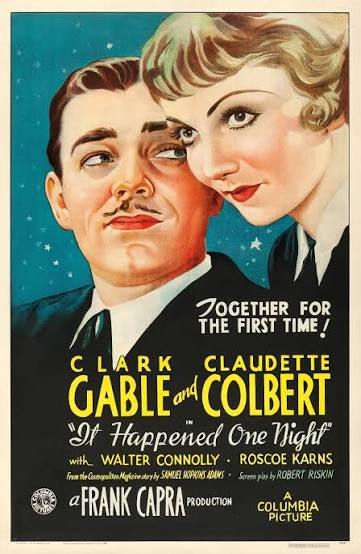
A quintessential Capra movie, that even 92 years later has lost none of its ability to entertain. Clark Gable and Claudette Colbert make for a terrific on screen couple, with the both of them sharing excellent chemistry. Gable is especially great here, with his clear skill for comedy shining through, something the likes of Gone with the Wind (1939) doesn’t get the opportunity to do.
Capra of course would go on to direct even greater films, but there is hardly a thing here that could be changed for the better. Robert Riskin’s script perfectly combines comedy and romance, filtered through with a great deal of social commentary, a lot of which is still prevalent today.
Apparently Colbert was extremely difficult to work with, with there being quite a bit of animosity between her and Capra, but you wouldn’t know this from her performance. Gable was also dissatisfied with the film's script but clearly rose above it, giving yet another sterling performance.
Rating: 4.5/5
George Cukor’s Keeper of the Flame (1942)

A lesser pairing of Spencer Tracey and Katherine Hepburn, Keeper of the Flame still manages to entertain through solid acting and an interesting plot. Cukor’s decision to shoot the entirety of the film on sound stages also does more harm than good, robbing the film of a necessary authenticity.
As great as Hepburn is, this isn’t the team up with Tracey most of their fans would be happy with, with Hepburn’s screen time being limited in comparison to Tracey’s. Still, she does well in the scenes she has, even though this is mostly Tracey’s picture. As expected, he is fantastic in the part, giving the role an air of integrity that other actors of the day would lack.
George Cukor would later speak of his displeasure of the film, and while I think he is being too hard on himself, he certainly went on to make better films, even a couple more Tracey/Hepburn vehicles.
Rating: 3/5
Richard Thorpe’s Malaya (1949)

A team up between Hollywood heavyweights James Stewart and Spencer Tracey really should be better than what Richard Thorpe’s film has to offer. Both actors do what they can within their limited roles, but they deserve better than this.
The split of Malaya is interesting enough, with an attempt to smuggle out rubber from Malaya during the height of the second world war offering up plenty of exciting opportunities. Sadly, Malaya doesn’t rise to the occasion, sorely lacking in pace or excitement. Thorpe does give us the odd decent action scene, but these aren’t enough to keep the pulse going.
Thankfully, the always terrific Syndney Greenstreet shows up as an old acquaintance of Tracey’s, with the film livening up anytime he is on screen. Sadly, this would mark Greenstreet’s final film role. Amazingly, Greenstreet only worked in film for a short 8 years, but in those years he packed in several classics like The Maltese Falcon (1941), Casablanca (1942) and Background to Danger (1943).
For any fans of Greenstreet, I would urge them to check out the early Don Siegel effort The Verdict (1946) , which puts the great man centre stage.
Rating: 2.5/5
Edward Dymtrk’s Soldier of Fortune (1955)

Something of a damp squib, Soldier of Fortune had the potential to be a great action adventure but is seriously let down by its lack of pace and chemistry between leading man Clark Gable and leading lady Susan Hayward. It doesn’t help that Hayward refused to travel to Hong Kong so all of her scenes are filmed on a soundstage which sticks out like a sore thumb amongst the real life locations.
The Hong Kong footage at least makes the film worthwhile, working as a nice time capsule of days gone by. Clark Gable is believable in the title role, even if he isn’t given much in the way of action. For a film called Soldier of Fortune you would really expect more action/thriller elements, whereas the production seems more interested in the romance at the core of the film. A romance that for the most part comes off as unbelievable.
Luckily for Gable, in the same year he starred in the magnificent The Tall Men from director Raol Walsh, easily one of the best Western’s of the era. A Western that used Gable to the fullest of his abilities.
Rating: 2/5
John Suits The Isolate Thief (2026)

Director John Suits was best known to me for being behind the Bruce Willis shitefest Anti-Life (2020). Obviously that didn’t exactly fill me with glee as I entered into his latest, the bleak western The Isolate Thief. However, it had a lot going for it, with a terrific cast headlined by Sean Bean. Also, Bean isn’t typically the kind of actor that shows up in the Western genre, so his appearance more than piqued my interest.
Actually, the fact that The Isolate Thief is a Western was probably enough for me to give it a go. I must say, The Isolate Thief rose above my initial expectations, with the resulting film being a suitably tense and violent tale, bolstered by several quality performances. I also appreciated the filmmakers' tendencies to use practical effects over poorly realised CGI. Sure, there is still the odd CGI shot, but the focus on practical effects work overshadowed this, with the gore effects making me wince.
One particularly gruesome sequence involves young Ty Simpkins getting shot through the foot, with the resulting effects work being especially noteworthy.
The film may be too bleak for some, as there is no room for levity throughout the entirety of the film, but for those with the stomach for it, this is one good Western.
Rating: 3.5/5
Yin Bo and Su Guan’s Murder Game (2026)

I’m not sure you could really classify Murder Game as a feature, clocking in at just 67 minutes, including credits. Still, within those 67 minutes, we are treated to an assortment of quality action scenes, with a fine mixture of gunplay and hand to hand combat.
The plot isn’t exactly original, but there is enough to keep you invested, with A Yixia’s retired assassin being put through the ringer by the villainous Temur Mamisashvili.
What was nice for a Chinese production was that there was very little in the way of propaganda espousing the greatness of the Chinese people. With such a short runtime, there probably wouldn’t have been time for this anyway.
An enjoyable time waster that works as a great showcase for leading lady A Yixia.
Rating: 3/5
Bruce Robinson’s Withnail & I (1987)

There’s not much I can say about what is easily one of the best films of the 80’s. With career defining performances from both Richard E Grant and Paul McGann coupled with Robinson’s hilarious and poignant script, Withnail & I is hard to beat. The subject matter could be bleak, but Robinson creates the perfect tone with the characters bringing the humour even to the most depressing situations.
Admittedly Grant has the more showier of the two lead roles, but this shouldn’t diminish the sterling work of McGann. In fact, the film wouldn’t work without him, with him being the catalyst for much of Grant’s best dialogue.
The supporting cast also shouldn’t be sniffed at, with the hilarious Richard Griffith’s stealing many a scene as the overly affectionate (perversely so) Uncle Monty. Smaller roles are filled by an unrecognisable Ralph Brown as local drug dealer Danny and Michael Elphick as a terrifying poacher.
Robinson would never again reach the heights of Withnail & I, with his follow up film How To Get Ahead in Advertising (1989) being a disappointing misfire. His foray into Hollywood filmmaking with Jennifer 8 (1992) wasn’t exactly met with much enthusiasm. Personally, I thought it was a great crime thriller that, while far removed from the likes of Withnail & I, showed that Robinson was more than a one trick pony. Sadly the failure of the film resulted in Robinson not directing for nearly 20 years, with the disappointing Rum Diary (2011) marking his return to the directors chair.
Rating: 5/5
Cecil B Demille’s Greatest Show on Earth (1952)

Being a Cecil B Demille film, it is no surprise that this is filmmaking on a grand scale. Demille perfectly captures all the wonder, excitement and drama of the circus, with its interesting assortment of characters more than enough to hold interest for the film's 2.5 hour running time.
Whilst third billed, Charlton Heston is essentially the lead as the Circus Manager trying to put on the best show possible. His on-off relationship with top billed Betty Hutton is where much of the film's drama comes from. Hutton gives an energetic performance, even if her melodramatic overacting is a bit much on occasion.
Cornel Wilde does well in a role originally earmarked for Burt Lancaster. You can see why De Mille thought of Lancaster, as the role of “The Great Sebastian” is almost tailor made for him, with Lancaster’s background as a circus acrobat making him a natural fit. To be honest, I think Lancaster may have been too big a personality for the role, and possibly would have overshadowed the other cast members.
The best performance is easily from James Stewart who spends the entire film painted as a clown. His backstory is the most interesting and certainly the most tragic of the film, with Stewart easily walking away with the movie. It also shows Stewart’s dedication to the role that you never once see him without his clown face on.
Heston would team up with Demille again for their better known collaboration The Ten Commandments (1956), which would prove to be DeMille’s final film as director. It’s not exactly a bad one to go out on.
Rod Lurie’s Lucky Strike (2026)

Lucky Strike marks the second collaboration between director Rod Lurie and actor Scott Eastwood. Like the Outpost, this is also a war movie, but rather focusing on WW2. Opening with the Millennium films logo kind of gave me an idea of what to expect, and I must say I wasn’t wrong. Lucky Strike has several quality action scenes that are hampered by extremely sub par CGI, a Millennium speciality.
The CGI isn’t enough to ruin what is otherwise a gripping war story, apparently based on a true story. Amazingly, the script for Lucky Strike has reportedly been floating around for the better part of 50 years, going through several rewrites, including one by Lurie before eventually reaching the screen.
Even being based on truth, the plot isn’t exactly original, essentially being a variation on Behind Enemy Lines (2001). However, Lurie keeps things moving at a good pace and Eastwood easily gives one of his best performances, with much of the film resting on his shoulders. For extended periods, he is the only actor on screen, with his attempts at surviving the hostile environment making for some gripping sequences.
After all the action and tension, the finale is something of a let down but the film builds up enough good will for this to be forgiven. Lucky Strike won't go into the pantheon of great WW2 movies, but it is definitely worth a watch.
Rating: 3/5
Robert Wise’s Odds Against Tomorrow (1959)

Robert Wise’s gritty thriller may now be 67 years old, but its themes of crime and racial intolerance are as prevalent now as they were back then. Focusing on an uneasy alliance between Jazz Lounge singer Harry Belafonte and the bigoted Robert Ryan, who partner with a never better Ed Begley to pull off what is meant to be a simple heist. I’m not spoiling it to say it goes tits up.
The fantastic cinematography from Joseph C Brun adds to the film's atmosphere, shooting the film in moody black and white. Wise even made the risky decision to shoot certain scenes with Infa-red film, giving these scenes their own distinct look.
Ballafonte is great in the lead role, a man struggling with his own personal demons and pushed into committing a crime through desperation more than anything else. Robert Ryan is also desperate but in a different way, with his ultimately portraying quite a pathetic individual, with very little in the way of morals. As expected, Ryan is fantastic. I can’t say I have ever seen this man give a poor performance, with him always making an impression.
Robert Wise doesn’t seem to be brought up enough when speaking of the film greats, but this guy could turn his hand to anything. Perfect proof of this is that his follow up film to this was West Side Story (1961).
Rating: 4/5
George Cukor’s Pat and Mike (1952)
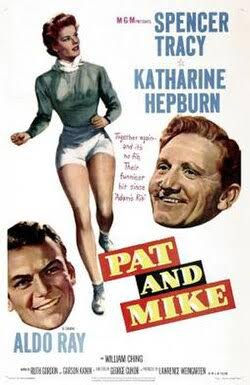
A major improvement over my other Tracey/Hepburn film of the week, Pat and Mike is an enjoyably light affair that has the two of them at their best. Interestingly, this was also directed by Keeper of the Flame’s George Cukor, but the difference here is that both actors are used to the best of their abilities.
Both Hepburn and Tracey made better films than this, but Pat and Mike is a perfect example of what made them such a winning pair, with their somewhat odd couple dynamic making for some great comedic sequences.
Whilst most of the focus is on Tracey and Hepburn, Aldo Ray makes an impression as the put out boxer, annoyed that Tracey’s Mike is putting all his attention on Hepburn’s Pat. I did find it funny when Ray’s character says he is only 24, with Ray looking a good decade older. The joke was on me though, as Ray actually was around 25/26 when he made the movie. I guess guys just looked older back then.
Rating: 3.5/5
Marco Brambilla’s Demolition Man (1993)

One of my favourite action films of the 90’s, Marco Brambilla’s Demolition Man hardly sets a foot wrong. Bolstered with excellent action scenes, a witty script and great performances, it amazes me that critic Gene Siskel gave it a thumbs down. I say that it surprises me, but considering Siskel was an absolute prick of a man, I really should have expected it. This was the guy that thought it was okay to publicise an actresses home address so she could be sent hate mail.
Rant aside, amongst the quality action is an assortment of cracking performances, with Stallone on top form as the titular Demolition Man John Spartan. However, it is Wesley Snipes that steals the show as the maniacal Simon Phoenix. It was a fair change from his more straight-laced role in the same year's Rising Sun (1993). Interestingly, Stallone wanted Jackie Chan for the Phoenix role, which would have been a massive misstep, as Chan would have been totally wrong for this role.
It also features something of a star-making turn for Sandra Bullock who from here would appear in Jan De Bont’s Speed (1994) the following year. Bullock actually replaced Lori Petty who after 2 days of shooting was let go, with the typical creative differences being cited as the reason for her departure.
Denis Leary is mainly there to go off on his typical comedic rants, in which he gets a few opportunities to do so. It is the polar opposite from his other film of 1993, chase thriller Judgement Night (1993) where he played an out and out villain.
Marco Brambilla is probably better known for his art installations these days than for his film work, with his follow up to Demolition Man being the frankly dogshit Excess Baggage (1997). Even Benicio Del Toro couldn’t save that misfire. It’s a shame too, as Demolition Man showed a lot of promise, although being a Joel Silver production, it is unclear how much of the final film is ultimately his. Either way, Demolition Man is still a bonafide classic.
An added bonus on the recent Arrow UHD is that it comes with the alternative version which subs Taco Bell for the more widely known (at the time) Pizza Hut. A minor change but a nice addition to the disc.
Rating: 5/5


Comments